Key
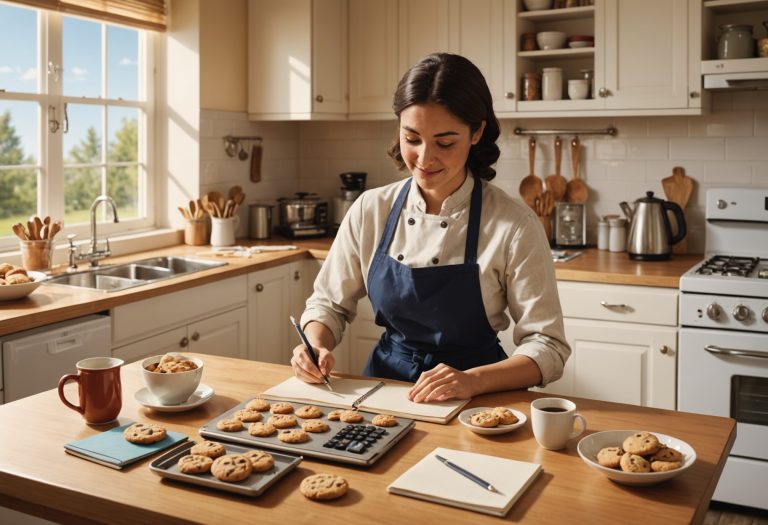
Price homemade cookies by covering ingredients, packaging, your time, and overhead, then round up to a clean number. Most home bakers land at 2 to 3 times ingredient cost, but the real secret is remembering to pay yourself an hourly wage.
A sustainable cookie price has to cover every cost: the flour and butter, the bags and boxes, the labels and stickers, your time mixing and baking, and a share of overhead like oven power, gas for deliveries, and platform fees. Too many bakers forget the time part and end up working for two dollars an hour.
👉 Free tool: make a cottage food label in a minute →
How Do I Calculate The Cost Per Cookie?
Start with your ingredient cost for one full batch, then divide by the number of cookies that batch makes. If a batch costs eight dollars in ingredients and yields four dozen cookies, that is about seventeen cents per cookie. Add the cost of one bag or box divided by how many cookies fit inside. Add your hourly wage times the hours you spent on that batch, divided by the number of cookies. Finally, add ten to twenty percent for overhead and waste.
That final number is your floor, not your selling price. It is the absolute minimum you need to stay in business. Your actual price should sit above that floor, rounded to something clean like two dollars or two fifty per cookie, twelve dollars or fifteen dollars per half dozen.
What Is The Step By Step Formula For Pricing Cookies?
- Calculate ingredient cost per batch and divide by cookies per batch to get cost per cookie.
- Add packaging cost per cookie (one bag or box divided by how many cookies it holds).
- Add your time cost: decide an hourly wage, multiply by hours spent per batch, divide by cookies in the batch.
- Add ten to twenty percent for overhead like electricity, gas, and waste.
- That total is your break-even floor—round up to a clean price and add a margin so you actually profit.
If you spend two hours mixing, baking, and decorating a batch of forty-eight cookies, and you want to earn fifteen dollars an hour, that is thirty dollars in labor divided by forty-eight cookies, or sixty-two cents per cookie just for your time. Ingredient and packaging costs stack on top of that.
How Much Should I Charge For A Dozen Homemade Cookies?
Price by the dozen and the half dozen, not by the single cookie, because customers expect bakery goods sold in standard quantities. A dozen makes the math easy and the price feel more reasonable than listing twelve individual cookies. Most home bakers charge between eighteen and thirty-six dollars per dozen for plain cookies, with a small premium for decorated or custom designs and for rush orders.
Check what local bakeries and other home bakers in your area charge, but do not race to the bottom. If everyone else sells a dozen for twenty dollars and your costs demand twenty-four, charge twenty-four. Competing on price alone burns you out fast.
Should I Use A Cookie Pricing Calculator?
Yes, because the math gets tedious and easy to mess up when you are tired after a long bake day. A free baked goods pricing calculator does the work for you: plug in your ingredient cost, batch size, hourly wage, and packaging cost, and it spits out a floor price and a suggested retail price. You can tweak the numbers until they feel right, then save the formula for next time.
The calculator also helps you see where your costs hide. Maybe your ingredient cost per cookie is only twenty cents, but your time adds another dollar. That clarity makes it easier to raise prices without guilt.
When Should I Raise My Cookie Prices?
Raise prices when you sell out every week. That is the clearest signal that demand outpaces supply and customers will pay more. Raise them when ingredient costs jump, when you add decorating time, or when you realize you have been working for less than minimum wage. Do not wait for permission.
If you are not a little nervous saying your price out loud, it is too low. That knot in your stomach when you quote thirty dollars a dozen means you are charging what your work is actually worth, not what you fear people will pay. Own that number.
How Do I Price Decorated Or Custom Cookies?
Add a premium for any extra time or skill. Decorated sugar cookies with royal icing take three times as long as drop cookies, so charge three times as much. Custom designs, special colors, or rush orders all deserve a surcharge—ten to fifty percent more depending on the complexity and the deadline.
Do not feel bad about this. Customers who want custom work understand they are paying for your expertise and the extra hours. If they balk, they were not your customer anyway.
What Costs Do Most Cookie Bakers Forget?
Time is the big one. Bakers count the flour and sugar but forget to pay themselves, or they pay themselves two dollars an hour because they love baking. Love does not cover the electric bill. Packaging is the second most forgotten cost—those cellophane bags, ribbon, and printed labels add up fast. Overhead is third: oven electricity, gas for deliveries, payment processing fees, website fees if you sell cookies online, and the cost of replacing worn-out baking sheets.
Waste matters too. Not every batch turns out perfect. Not every cookie ships without breaking. Build a cushion into your price so one bad batch does not wipe out a week of profit.
Common Questions
How Much Should I Charge For A Half Dozen Cookies?
Charge slightly more than half the price of a dozen, not exactly half. If a dozen costs twenty-four dollars, charge thirteen or fourteen for a half dozen. The smaller quantity costs you nearly the same in packaging and time per cookie, so the per-unit price should reflect that.
Is 2 To 3 Times Ingredient Cost A Good Rule?
It is a starting point, not a rule. Two to three times ingredient cost often lands near break-even once you add time and overhead. Use it as a quick gut check, but run the full math with a calculator to be sure you are actually making money.
Do I Need A Business License To Sell Homemade Cookies?
Most states allow cottage food sales without a commercial license, but rules vary. Check your state’s cottage food law for limits on revenue, where you can sell, and what labels you need. Pricing has nothing to do with legality, but legal compliance protects your pricing from getting shut down.
What If My Prices Are Higher Than Everyone Else?
Good. Higher prices filter out bargain hunters and attract customers who value quality and your time. If you deliver on flavor and presentation, people will pay. If no one buys at your price, lower it five percent and try again, but do not drop below your floor.
Should I Offer Discounts For Bulk Orders?
Only if the bulk order actually saves you time per cookie. If someone orders ten dozen and you can bake them all at once with less packaging fuss, a five or ten percent discount makes sense. If each dozen still takes the same effort, charge full price.
How Do I Handle Customers Who Say My Cookies Are Too Expensive?
Smile and say, “I price them to cover quality ingredients and the time I put into each batch.” Do not argue or justify further. Customers who complain about price are usually not your buyers. Let them go buy grocery store cookies.
Can I Use The Same Pricing Formula For Other Baked Goods?
Yes. The same formula works for brownies, cupcakes, bread, and cakes. Adjust the hourly wage and overhead percentage if the item takes significantly more skill or equipment, but the core math stays the same.
Final Thoughts
Pricing homemade cookies right means respecting your own labor as much as your ingredients. Use a pricing calculator to do the math honestly, then round up to a number that makes you a little nervous. That nervousness is a sign you are charging what you are worth, not what you are afraid to ask.
Set your floor, add a margin, and adjust as you learn what your market will bear. If you sell out every week, raise your prices. If you are working for less than you would earn flipping burgers, raise your prices. Your time and skill have value, and your price should show it.
Try KeyHud for free to manage orders, track costs, and keep your cookie business organized without drowning in spreadsheets.
What hourly wage did you decide you deserve for your baking time, and does your current price actually pay you that?
Want to see this working on a real storefront?
See Ana's Kitchen → — a real KeyHUD storefront we built as an example (not an actual business).
You might also like